
A Beginner’s Guide to Choosing Quilting Fabrics with Bold Colors and Prints
Every quilter has fears, big or small. What really matters is how those fears hold us back from stepping outside our comfort zones to create something beautiful and unique. What is your biggest quilting fear? I would bet that many of you said choosing the right fabric. More specifically, combining busy prints and bold colors. As I share some tips for choosing your quilting fabrics, remember that these are based on what I have learned through trial and error. Take what makes sense for you and have fun with the process.
A Little Vocabulary Lesson
Before we dive into mixing busy fabrics and bold prints, it helps to know some basic quilting fabric terms that will make fabric selection easier. Small Print Fabric: Fabric with tiny or intricate designs that tend to blend together from a distance. Large Print Fabric: Fabric with big motifs, usually larger than five inches, that immediately stand out. Blender Fabric: Tone-on-tone or subtle designs that blend easily with other fabrics and help balance busier prints. Solid Fabric: A single-color fabric with no printed design. These terms will help you identify what you already have and what you might want to add to create balance in your quilt.Which Comes First, the Fabric or the Quilt Pattern?
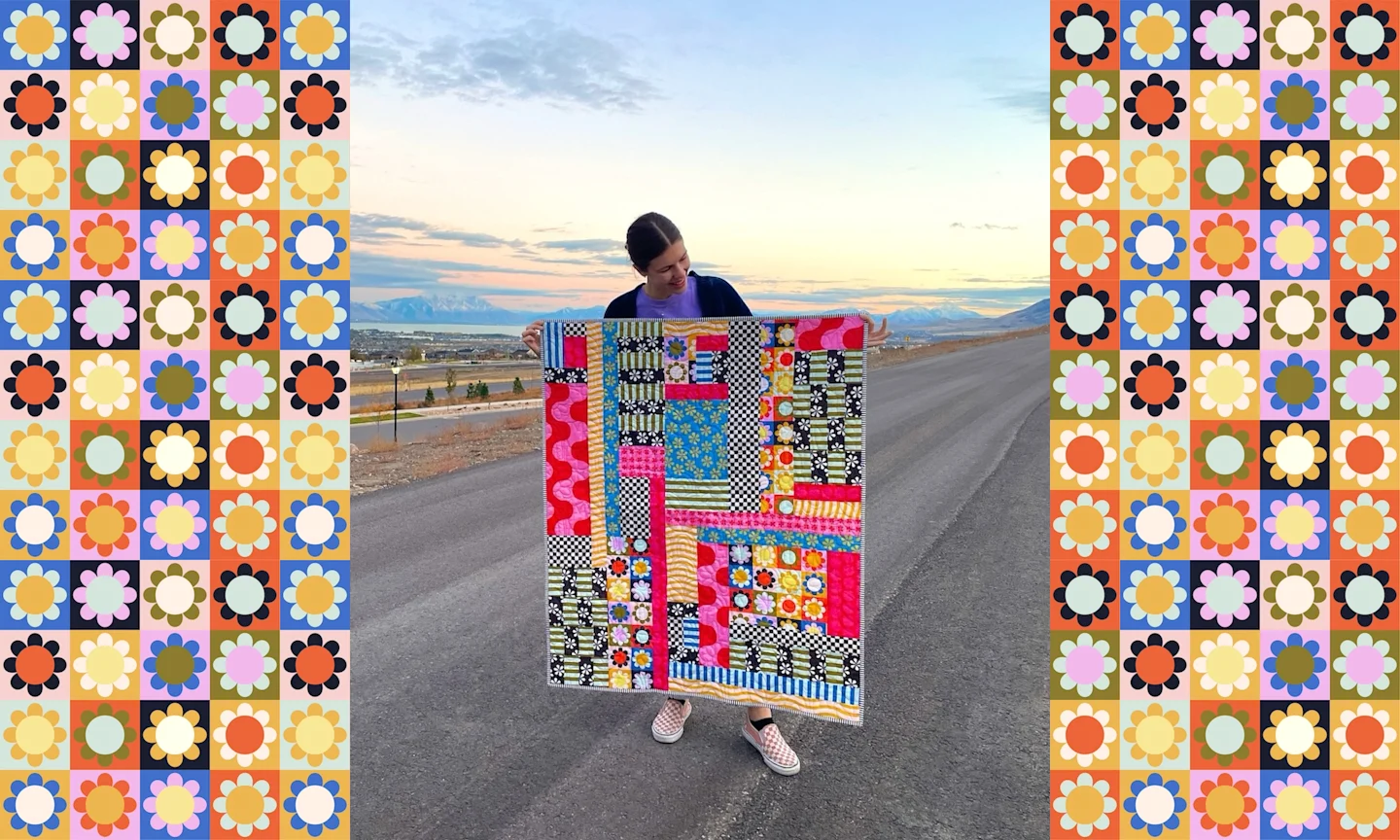
Does it matter whether you choose your fabric or your quilt pattern first? The answer is no. Choose whichever inspires you. I have found quilt patterns that spoke to me, even when I had no idea what fabrics to use. Just like you, I have found patterns that spoke to me and had no clue what fabrics to use. I’ve also found fabrics that I am obsessed with, but have no clue what pattern to use them in. Recently, I fell in love with the City Planning Quilt Pattern by Urban Dwell Studio. I had never made an ultra-modern quilt before, and this pattern felt like the perfect place to start. Even though I loved the pattern, I had only seen it made with solid fabric, and even though solids are beautiful, they are not what I naturally gravitate toward. I love bright, funky, chaotic quilts. So I went on a search for bold modern fabrics that would complement the pattern.Choosing Your Fabrics
Since I wanted modern fabrics to match the feel of the City Planning Quilt Pattern, I started on Spoonflower’s quilting inspiration page. I saw a quilted duffle bag made by Kaitlyn Howell of @knotandthread with a gorgeous retro floral print by The House That Lars Built. It was a large print fabric that would work perfectly as the larger blocks in the quilt pattern. When you are choosing your quilting fabrics, I recommend finding one large print fabric that inspires you. Then, using that print as your guide to choose your coordinating fabrics. Once you have your main print chosen, you can add supporting fabrics around it. To keep a busy quilt balanced, I like to choose the smallest amount of large print fabrics, a bit more medium prints, then even more small prints and blenders. Within those categories, I try to pick a good mix of design styles. For example, if your large print is an organic floral, pair it with smaller florals, stripes, polka dots, or checkered designs that complement it. If you are up for a quick homework assignment, pull out a single fabric collection from your stash and separate it into four piles: large prints, medium prints, small prints, and blenders. Count how many of each type you find. Most fabric designers intentionally create collections with this balance. In my City Planning quilt, I used the 3-inch Retro Florals and the Wavy Stripe Blood Orange and Pink as my large prints. I used two Mini Calcada print in Light Blue and Yellow and Espresso and Cream as medium prints, Primrose and Margrete Pink and Red as my small prints, and a variety of stripe and checkered prints as blenders. You can shop all the designs I used here! Now that we have talked about scale and print, let us talk about color choice.Color Choice
After I fell in love with the Retro Floral print, my next step was to choose colors that complemented it. Lucky, the main fabric design included eight to ten colors that I could pull from, including two blues, two reds, yellow, green, black, and white. I used these colors as a guide for selecting the rest of my fabrics. When you find a fabric you love, take a moment to identify the colors in it. These colors can give you a helpful starting point when building your palette. One of the best ways to calm down a bright or chaotic quilt is to play with value. Value refers to how light or dark a color appears. As I am looking for fabrics, I strive to look foran equal number of light, medium, and darker value fabrics. I like to take photos of my fabric in black and white to help me better identify the value of the fabric. If you want to continue your homework, take the same fabric collection you sorted earlier and separate it into piles of light, medium, and dark values. Notice where your gaps are. Understanding value can completely change the look of your quilts.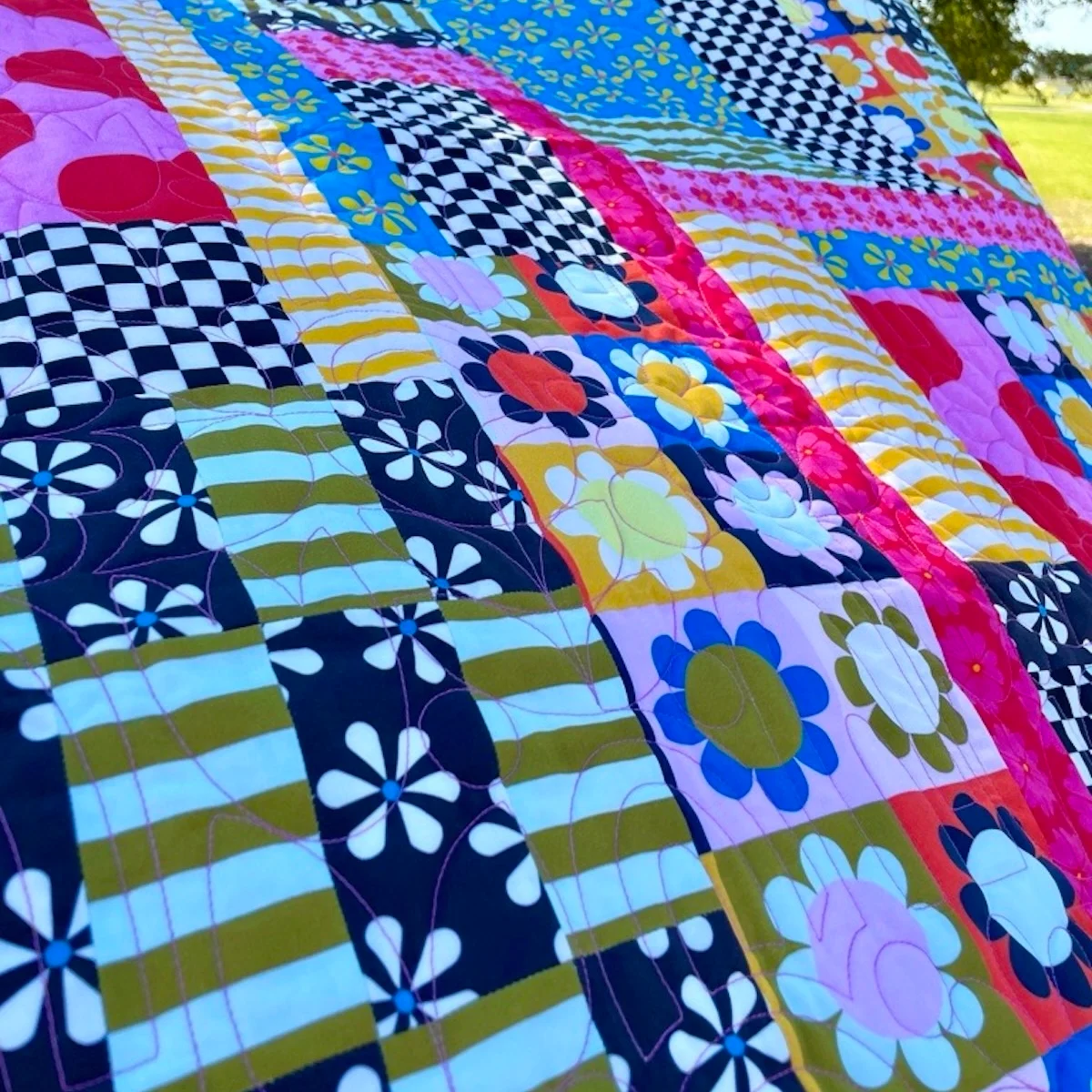
Fabric Placement
Once you have all your fabrics chosen, the final step is planning your layout. This part is all about your personal preference, the overall look you want to create, and the goal you have for your quilt. Ask yourself, what do I want people to notice when they look at my quilt? Do you want people to notice the gradient of color, chaos starting in the center then becoming calm as you move out, or do you want there to be a balance of color, value, and print throughout your quilt? For my City Planning quilt, I wanted an even balance across the entire quilt. To create balance, you want to strategically place different colors and values next to each other. This can be a little tricky sometimes, so to make the process easier, I will start by placing blocks by vibes and vibes alone, focusing on the even distribution of color. This is where you need to trust yourself as an artist. Then I will take a picture of my layout in black and white to see if there is an even distribution of value. I’ll make some changes based of the picture, then repeat that process until I like the way everything looks. If you are a perfectionist like me, you could move blocks around for hours. The truth is, there is no perfect layout. Make three to five changes and then call it good. If you still do not love it, step away for a day or two and come back with fresh eyes. There is no need to stress over the final layout. Whatever layout you choose will look amazing once it is sewn together! Remember, there is no perfect way to choose quilting fabric. If one of your goals is to improve your fabric selection skills, start with a print you love and build around it with coordinating prints, colors, and values. Then, jump in and create something beautiful. If you have questions about fabric selection, leave a comment below or message me on social media. I cannot wait to see what you create and support you along the way! For more quilting tips and tricks, make sure to follow me on Instagram, Facebook, and Tiktok!About the Author
Jenna Hall is a quilter, educator, and content creator who loves sharing her passion for quilting with others. What started as a creative outlet has grown into both a career in the quilting industry and a thriving online community of more than 198,000 quilters across TikTok, Instagram, and Facebook. Jenna is known for her approachable teaching style and for making quilting feel fun, doable, and inspiring, whether you're brand new or have been sewing for years. She enjoys breaking down tricky techniques into simple steps, helping students gain confidence and discover the joy of creating something by hand.Made to order using unique designs from artists worldwide.
The World’s Largest Design Library for Wallpaper and Textiles
Discover a world of design—from minimalist to maximalist. Thousands of global artists, with new styles added constantly.
Custom Designs on Any Item
Our made-to-order model lets you print any design on any material. Coordinate patterns across rooms for a cohesive, personalized home.
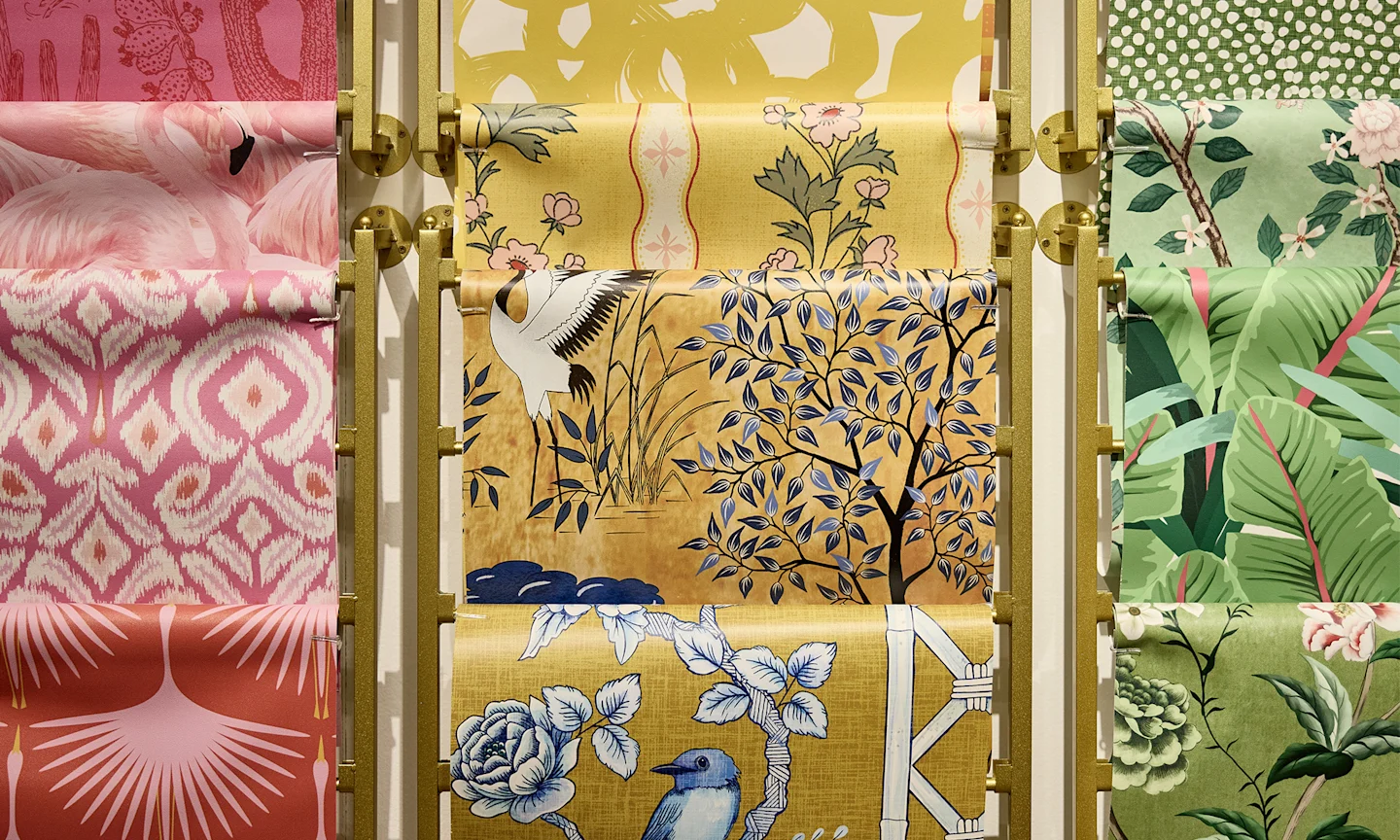
Premium Materials, Always in Stock
Trusted by pros and enthusiasts, our responsibly sourced textiles and papers offer the perfect finish—from smooth to textured, delicate to durable.
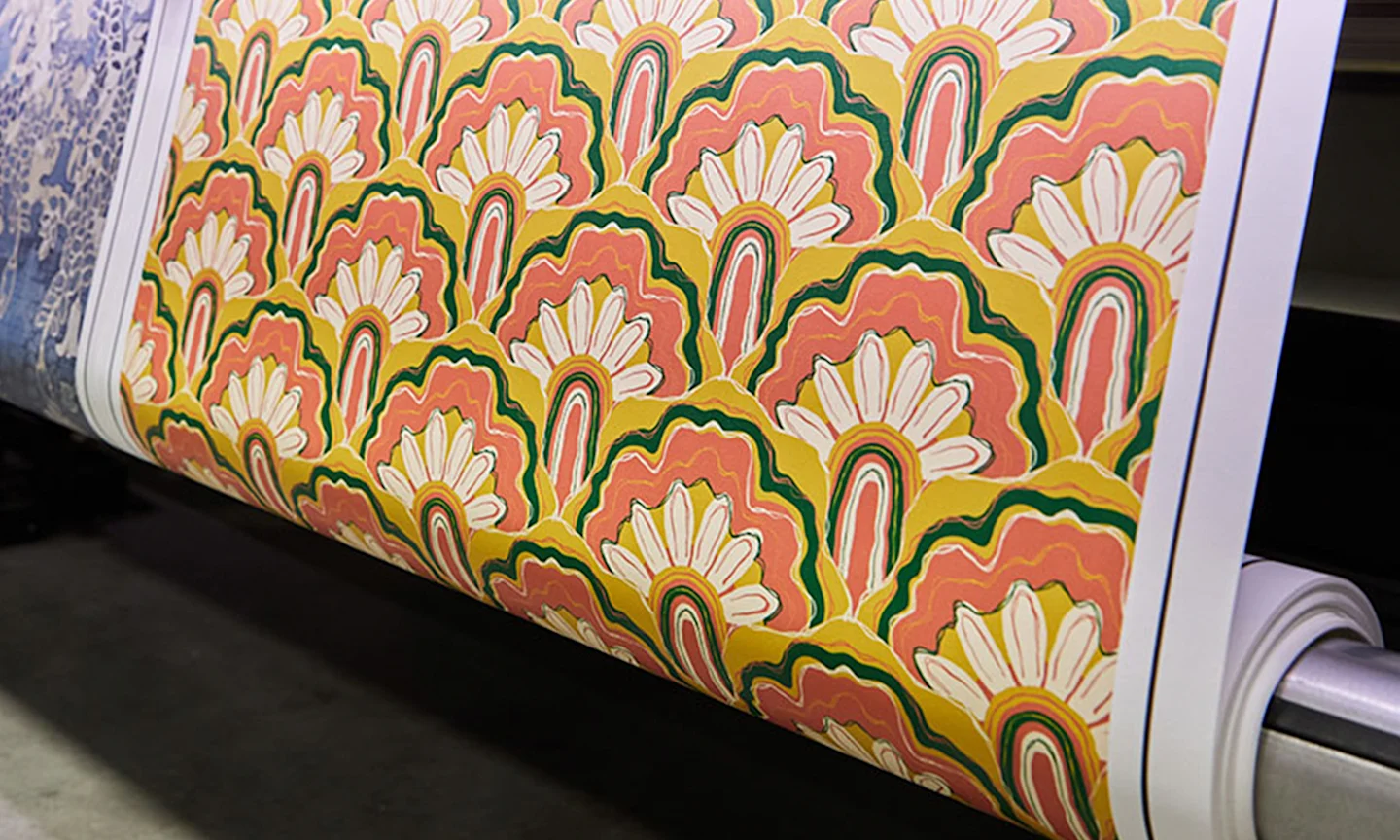
Printed on Demand in the USA
Our print-on-demand model lets you choose your design, material, and quantity—minimizing waste with non-toxic inks and reduced packaging.