
March 27, 2026 • Updated May 22, 2026
How to Mix Patterns Like a Pro Using Spoonflower Designs
In this post, Marynn Udvarhelyi walks you through the exact process she uses with her clients so you can mix patterns like a pro and have fun doing it,too.
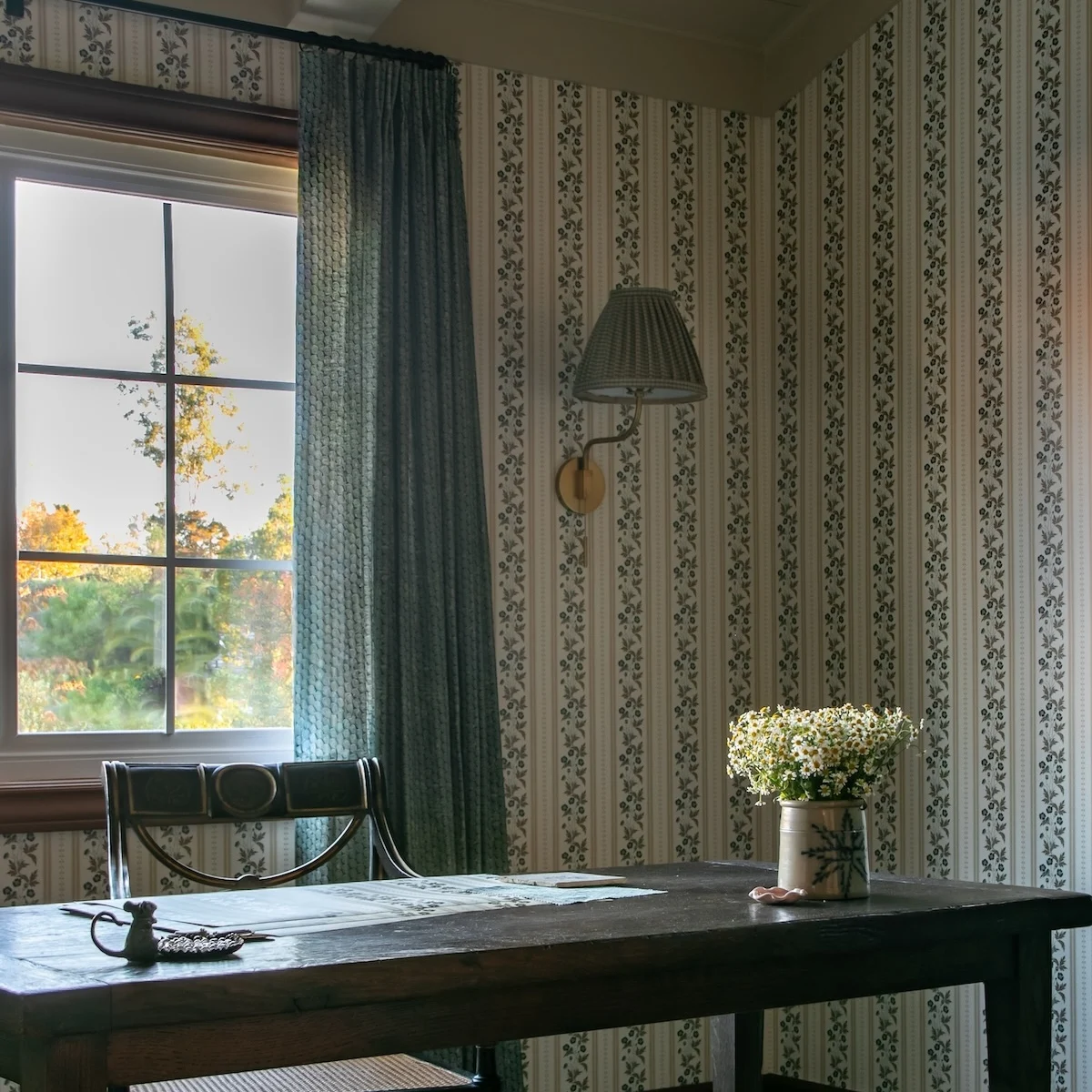
Whenever I start a new room design, I almost always begin with a pattern. Not paint, not furniture…a pattern. I love how one beautiful design can spark an entire story and shape the atmosphere of a space. A floral can make a room feel nostalgic and tender, while a stripe adds structure and charm. A vintage-inspired block print brings instant warmth, and a playful check adds a little whimsy. Mixing these patterns is one of my favorite ways to create spaces that feel layered, interesting, and deeply personal.
And contrary to popular belief, you don’t need to be a designer to mix patterns confidently. With Spoonflower’s endless library of prints, pattern mixing becomes less about rules and more about discovering combinations that tell your story. In this post, I’m walking you through the exact process I use with my clients so you can mix patterns like a pro and have fun doing it.
Start With One “Hero” Pattern
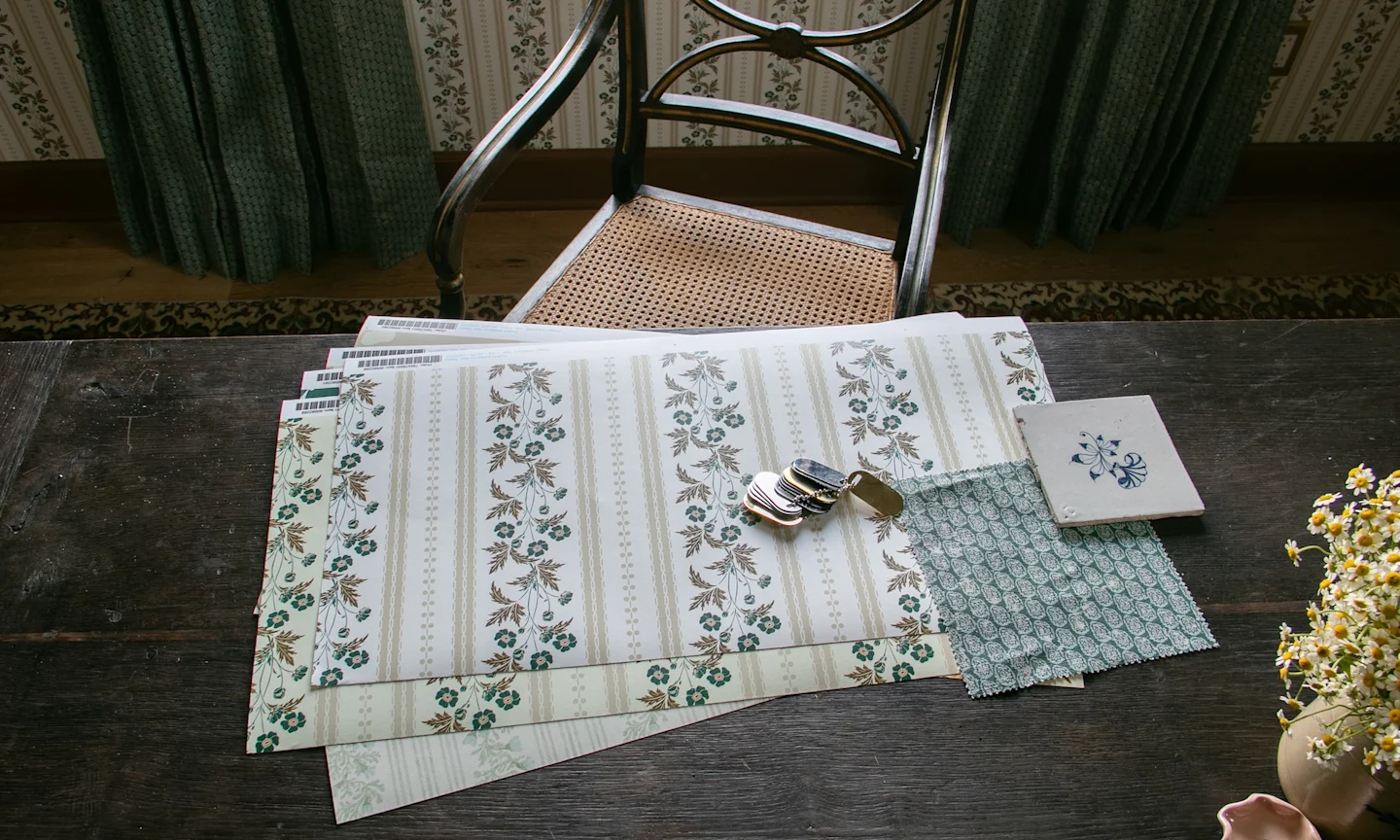
Every beautifully layered room begins with one pattern that sets the tone. I like to think of it as the “hero” piece: the print that makes your heart skip a beat. This could be a floral wallpaper in an unexpected colorway, a block print fabric for drapery, or a vintage-inspired stripe that instantly grounds the space. Once you choose your hero pattern, everything else becomes easier. It gives you a color palette, a mood, and a direction for the rest of your design decisions.Tips for choosing your hero pattern:
- Pick the pattern you're most excited about, even if it feels a little daring.
- Let the hero pattern establish the room’s emotional tone (romantic, playful, traditional, modern cottage, etc.)
- Pay attention to scale. Your hero pattern can be medium or large-scale, but it should feel substantial enough to anchor the room.
Build a Cohesive Color Palette
Once you have your hero print, use its color story to guide the others. I like to pull out two main colors and one accent color to create harmony across the room.In practice, this might look like:
- A hero floral wallpaper in navy, cream, and rust
- A coordinating gingham fabric in navy blue
- A smaller floral in rust and cream for a pillow
- A block-print stripe incorporating all three hues
Color palette tips:
- Keep everything in the same temperature family (all warm or all cool)
- Repetition is your best friend. Use a color at least twice in the room.
- Neutrals count as colors! Don’t forget ivory, tan, warm gray, or chocolate.
Mix Pattern Scales for Balance
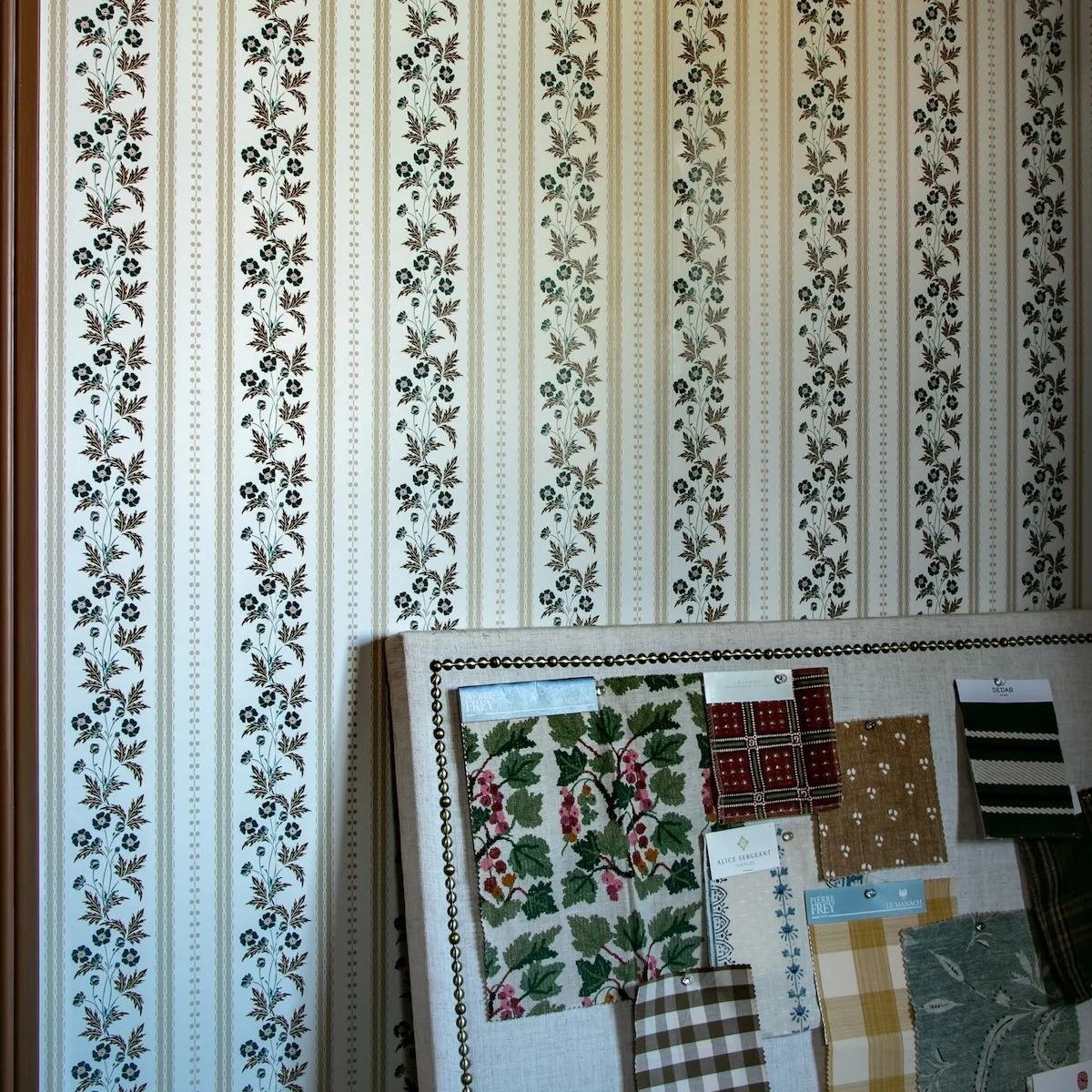
This is where pattern mixing goes from overwhelming to effortless. The secret is to vary scale.Think of it like a visual rhythm:
Large-scale pattern: your hero print Medium-scale pattern: a supporting print (often a stripe, damask, or geometric) Small-scale pattern: tiny ditsy florals, micro-checks, or subtle textures When all three are present, the room feels layered but not chaotic.My go-to pattern scale formula:
- One large-scale print (wallpaper, drapery, or bedding)
- One medium-scale print (accent fabric like a roman shade or chair cushion)
- One small-scale print (pillow, lampshade, or trim)
Combine Different Pattern Types for Depth
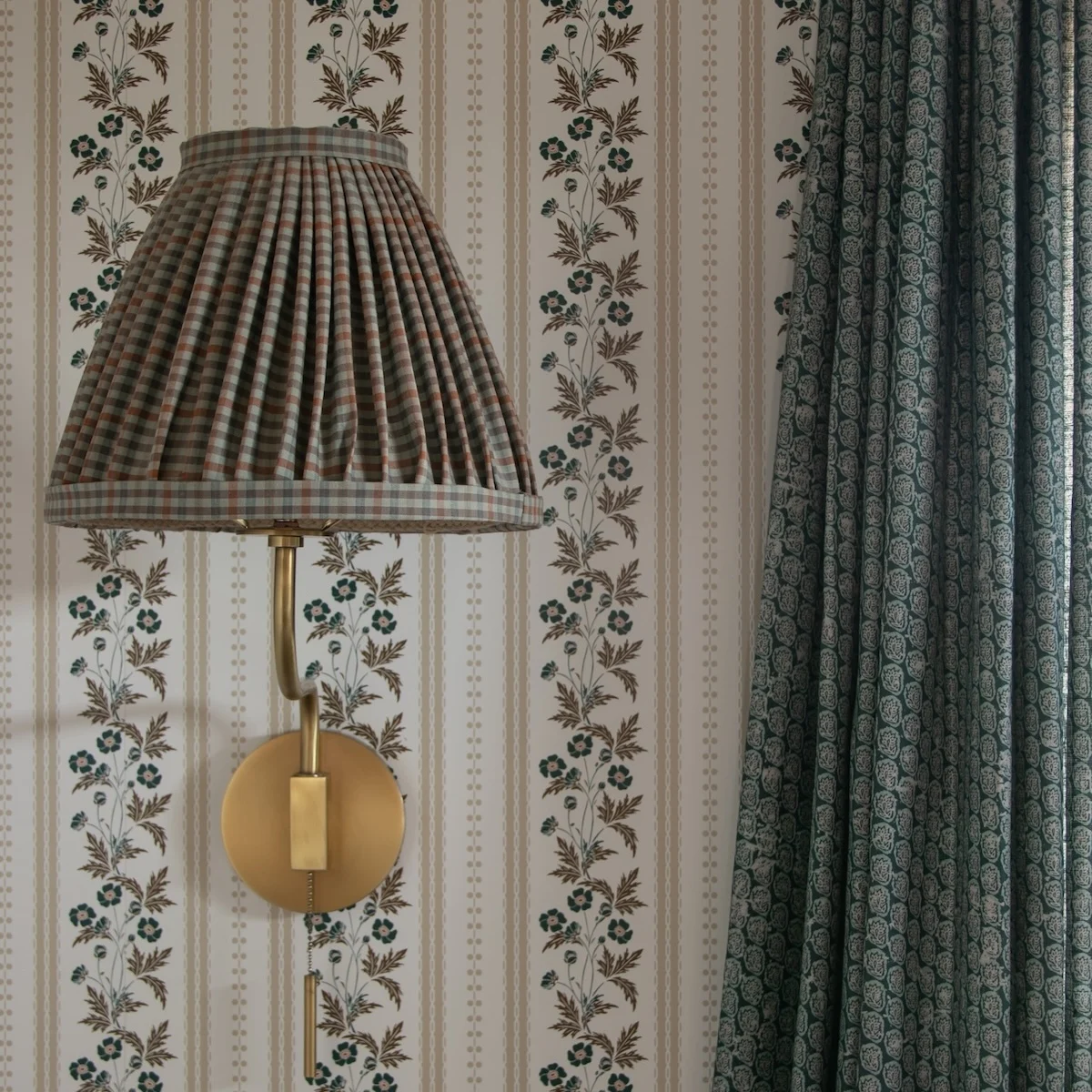
A room full of florals can feel flat, even if the colors match. To create dimension, combine different types of patterns.Here are combinations that always work:
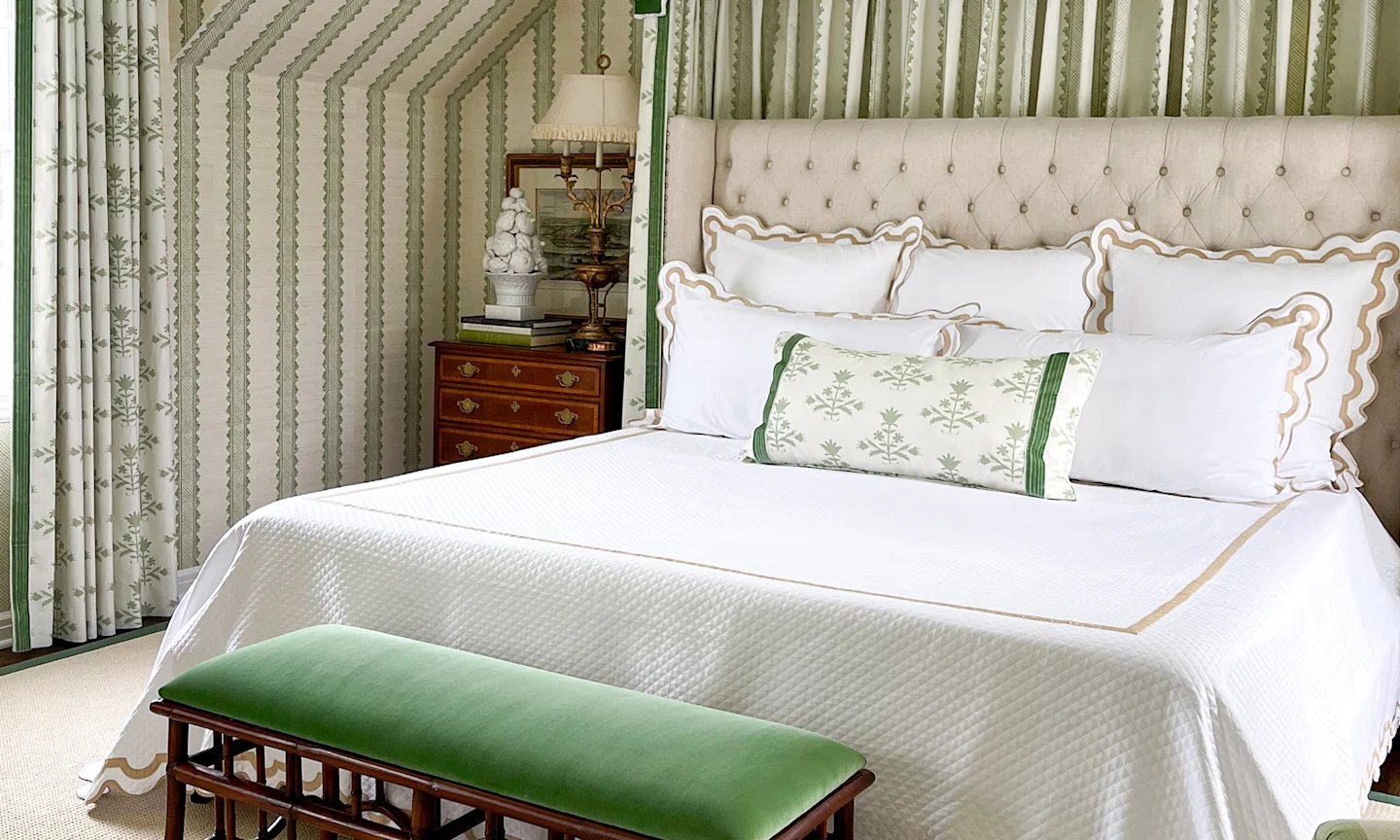
- Floral + Stripe + Gingham
- Botanical + Block Print + Solid Texture
- Toile + Check + Small Geometric
- Abstract + Floral + Plaid
Test Your Pattern Mix Before Committing
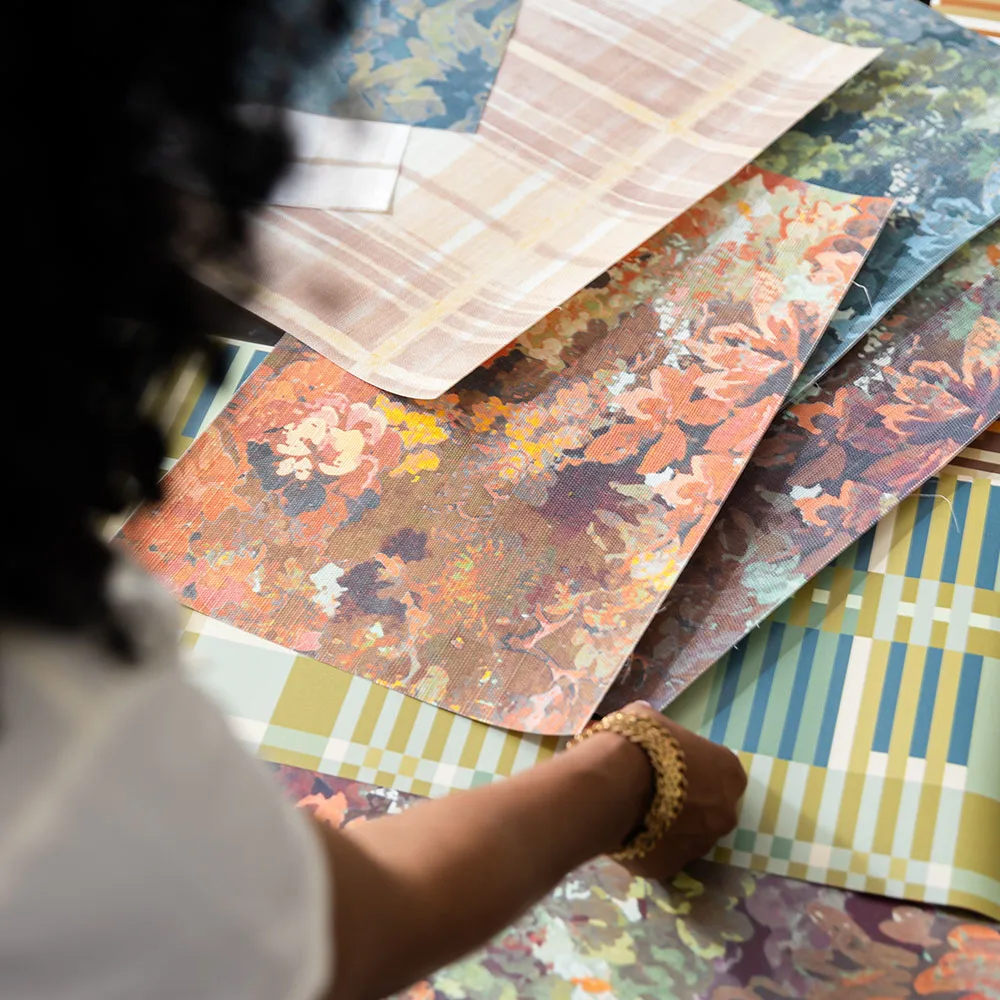
A designer would never order yards of fabric or rolls of wallpaper without testing the mix of patterns and colors first and neither should you. Spoonflower’s swatches are incredibly helpful here.Ways to test your mix:
- Order swatches and lay them out together in natural light.
- Snap a photo on your phone. Your eye sees harmony more easily in a picture.
- Try combinations in different areas of your home.
- Create a digital mood board if you prefer planning visually.
Mixing patterns doesn’t have to be intimidating. When you start with a hero pattern, build a cohesive color palette, vary your scales, and combine different types of patterns, your home will begin to feel layered, lived-in, and wonderfully personal. Spoonflower’s vast library of designs makes it easy to create a home that truly reflects your style and tells your story. If you’re ready to start experimenting, try choosing one pattern you love and build from there. You may be surprised by how natural it starts to feel. And if you’d like more pattern-mixing inspiration, following along on Instagram where I share my latest room reveals and behind-the-scenes projects.
WHY SPOONFLOWER?
Made to order using unique designs from artists worldwide.
The World’s Largest Design Library for Wallpaper and Textiles
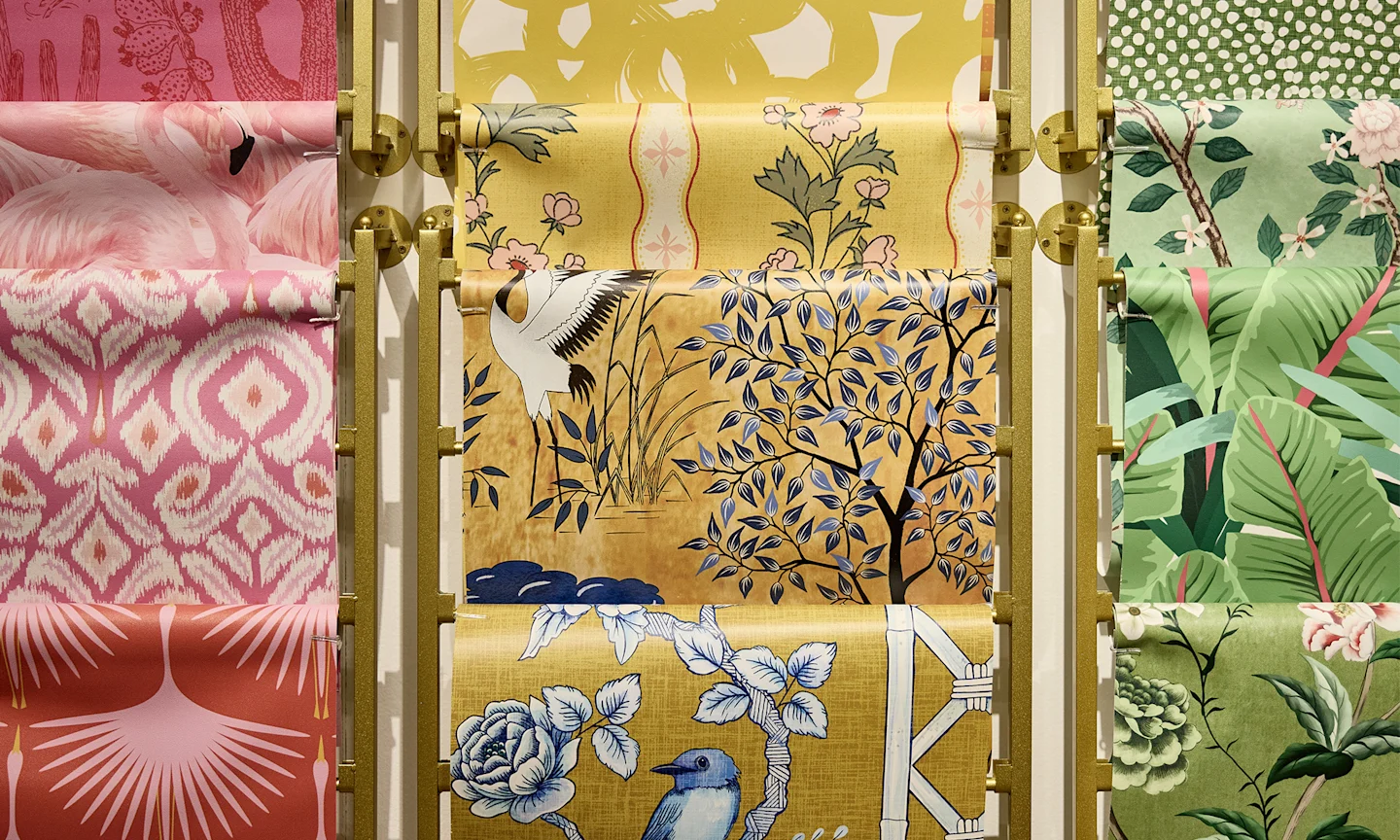
Discover a world of design—from minimalist to maximalist. Thousands of global artists, with new styles added constantly.
Custom Designs on Any Item
Our made-to-order model lets you print any design on any material. Coordinate patterns across rooms for a cohesive, personalized home.
Premium Materials, Always in Stock
Trusted by pros and enthusiasts, our responsibly sourced textiles and papers offer the perfect finish—from smooth to textured, delicate to durable.
Printed on Demand in the USA
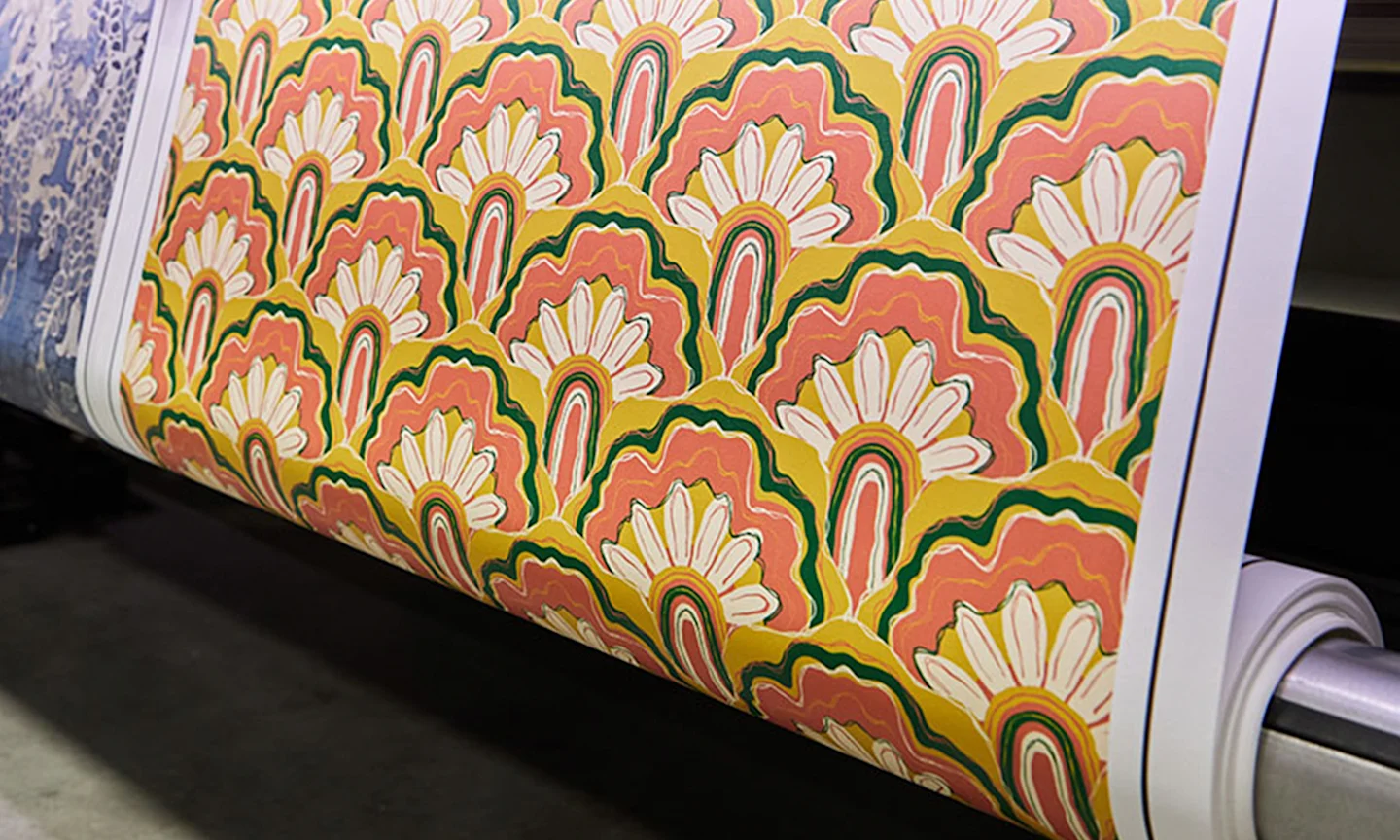
Our print-on-demand model lets you choose your design, material, and quantity—minimizing waste with non-toxic inks and reduced packaging.